
Visualizing Japan (1850s-1930s): Westernization, Protest, Modernity
A HarvardX / MITx MOOC (2026)
FACULTY (VJx)
|
|
John W. DowerJohn Dower, emeritus professor of Japanese history, retired from the History faculty in 2010 but remains active in MIT Visualizing Cultures: a pioneering website he co-founded with Professor Shigeru Miyagawa in 2002 that breaks new ground in the scholarly use of visual materials to reexamine the experience of Japan and China in the modern world. As of 2024, eleven of the lengthy presentations on this multi-unit site were authored by him. |
 |
Andrew GordonAndrew Gordon is the Lee and Juliet Folger Fund Professor of History at Harvard University. Professor Gordon teaches courses on modern Japanese history with a primary research interest in labor, class, and the social and political history of modern Japan. He is currently working with colleagues in Japan and the United States to create a digital archive of Japan’s March 2011 disasters. |
 |
Shigeru MiyagawaMiyagawa has been involved with many aspects of digital learning at MIT. He was Senior Associate Dean for Open Learning, 2018 - 2021. He served on the original MIT committee that proposed OpenCourseWare, and was the Chair of the MIT OpenCourseWare Faculty Advisory Committee, 2010 - 2013. He is also Co-director of Visualizing Cultures with John Dower. With Andrew Gordon of Harvard, Gennifer Weisenfeld of Duke, and Professor Dower, he created Visualizing Japan, a Harvard-MIT MOOC offered by edX that has attracted over 20,000 learners world-wide. |
 |
Gennifer WeisenfeldGennifer Weisenfeld is the Walter H. Annenberg Distinguished Professor of Art, Art History, and Visual Studies at Duke University. She is the author of Gas Mask Nation: Visualizing Civil Air Defense in Wartime Japan (University of Chicago Press, 2023), Mavo: Japanese Artists and the Avant-Garde, 1905-1931 (University of California Press, 2002), and Imaging Disaster: Tokyo and the Visual Culture of Japan’s Great Earthquake of 1923 (University of California Press, 2012) in addition to co-editing the volume Crossing the Sea: Essays on East Asian Art in Honor of Professor Yoshiaki Shimizu, with Gregory Levine and Andrew Watsky (Princeton University Press, 2012), she has written numerous journal articles, including several on the history of Japanese design, such as “‘From Baby’s First Bath’: Kaō Soap and Modern Japanese Commercial Design” (The Art Bulletin, September 2004). |

Project Lead Content Developers
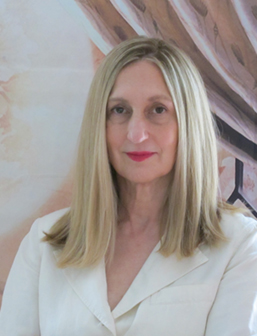 |
Ellen SebringLead Content Developer for MITx on VJx v1. Ellen Sebring, PhD, is an artist, designer, and new media researcher. She has been the Creative Director of the MIT Visualizing Cultures project since its founding in 2002. She was a Fellow at the Center for Advanced Visual Studies (CAVS) at MIT, and Post-Doctoral Associate at Duke University. Sebring’s first book— Centerbook: The Center for Advanced Visual Studies and the Evolution of Art-Science-Technology at MIT—came out in fall of 2019, co-authored with Elizabeth Goldring. Her essays on image-driven scholarship and history include Civilization & Barbarism: Cartoon Commentary & the “White Man’s Burden” (1898–1902), published by MIT Visualizing Cultures, and reprinted in several academic journals. As President of Botticelli Interactive (1997-2002) Sebring directed new media development, including the “Titian Kiosk,” awarded The New York Festivals’ World Medal; an interactive television prototype commissioned by the Institute for Civil Society; "Star Festival," Best of Show at MacWorld Expo; and "StarNetwork," starring George Takei, awarded the Distinguished Award at the Multimedia GrandPrix 2000, Tokyo. |
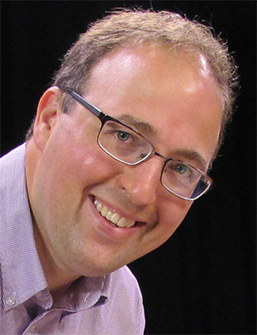 |
Jascha SmilackJascha Smillack is the Director of HarvardX Courses. Jascha joined HarvardX in 2013 and has worked as a Project Lead, Senior Project Lead, and Manager of Instructional Development. His courses include Justice, Exercising Leadership: Foundational Principles (Co-lead), Visualizing Japan (finalist for the 2015 Japan Prize), the First Nights series, Contract Law: From Trust to Promise to Contract (edX Prize finalist in 2016), Poetry in America - Modernism, The Pyramids of Giza, and others. Prior to HarvardX, Jascha worked across multiple institutions in higher ed, including at Harvard since 2003. He taught Chinese literature at Tufts University and courses in East Asian Comparative Literature at Boston University. Jascha holds a B.A. from Kenyon College, and an M.A. and Ph.D. from Harvard University. |
Project Team Bios (2016)
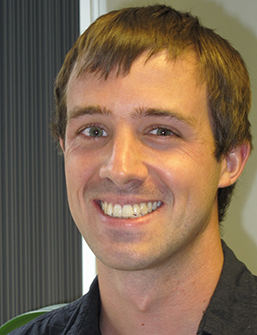 |
Michael ThorntonLead Content Developer for HarvardX for Visualizing Japan, and teaching fellow for the MITx run of the course in 2016. A native of Kobe and Tokyo, Japan, Michael Thornton is a Ph.D. candidate in the History Department at Harvard University. He earned his B.A. in History at Yale University, and spent a semester as a visiting student at the University of Heidelberg, Germany. His teaching and research interests include early modern and modern Japanese history, urban history, and environmental history. He is currently writing a dissertation on the history of Sapporo in the late nineteenth century. As Course Developer, Michael wrote all of the assessments and course text, and he designed the overall structure of Visualizing Japan. He contributed themes for discussion in video pre-production, edited notes for video post-production, compiled and tracked revisions through beta-testing, and also created the image citations. |
|
|
Amin GhadimiTeaching Fellow for VJx v1. Amin Ghadimi is a doctoral student in History and East Asian Languages at Harvard. He specializes in modern Japanese history. His recent research projects have dealt with connections among the local, national, and transnational in the political history of the opening of Kobe as a treaty port; the roles of affect and happenstance in the diplomatic history of the Meiji Restoration; and the relationship between democracy and imperialism in the intellectual history of the radicalization of the Movement for Freedom and Popular Rights. Amin holds a B.A. in East Asian Studies from Columbia and an M.A. in the same field from Yale. He was born and raised in Kobe. |
 |
Maria KobrinaMaria Kobrina has been a Video Editor at HarvardX since 2014. She previously served as Video Editor and Online Editor at the Harvard-Smithsonian Center for Astrophysics for 7 years, and prior to that was Videographer and Video Editor for The David Project. Maria graduated with a BFA summa cum laude in Film and Writing from Emerson College in 2004. |
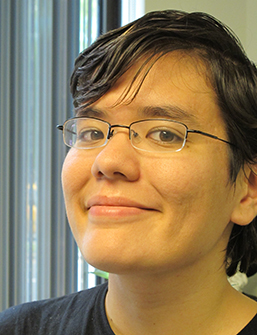 |
Alyssa WalnMIT UROP. I majored in Computer Science at MIT with a minor in Japanese. Interested in UI/UX design. I am the source of bugs in the experimental assessments other than Annotation Tool exercises. I was on the course team for version 1. |
 |
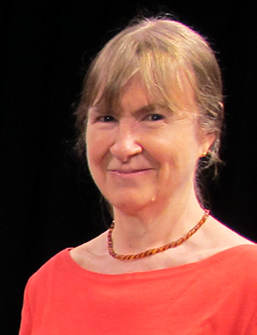
Sophie CaoMIT UROP. Junior majoring in Brain and Cognitive Sciences. I'm interested in languages and language acquisition. For VJx version 1, I worked on putting up text and image content. In my free time, I enjoy making/eating food and sleeping. |
 |
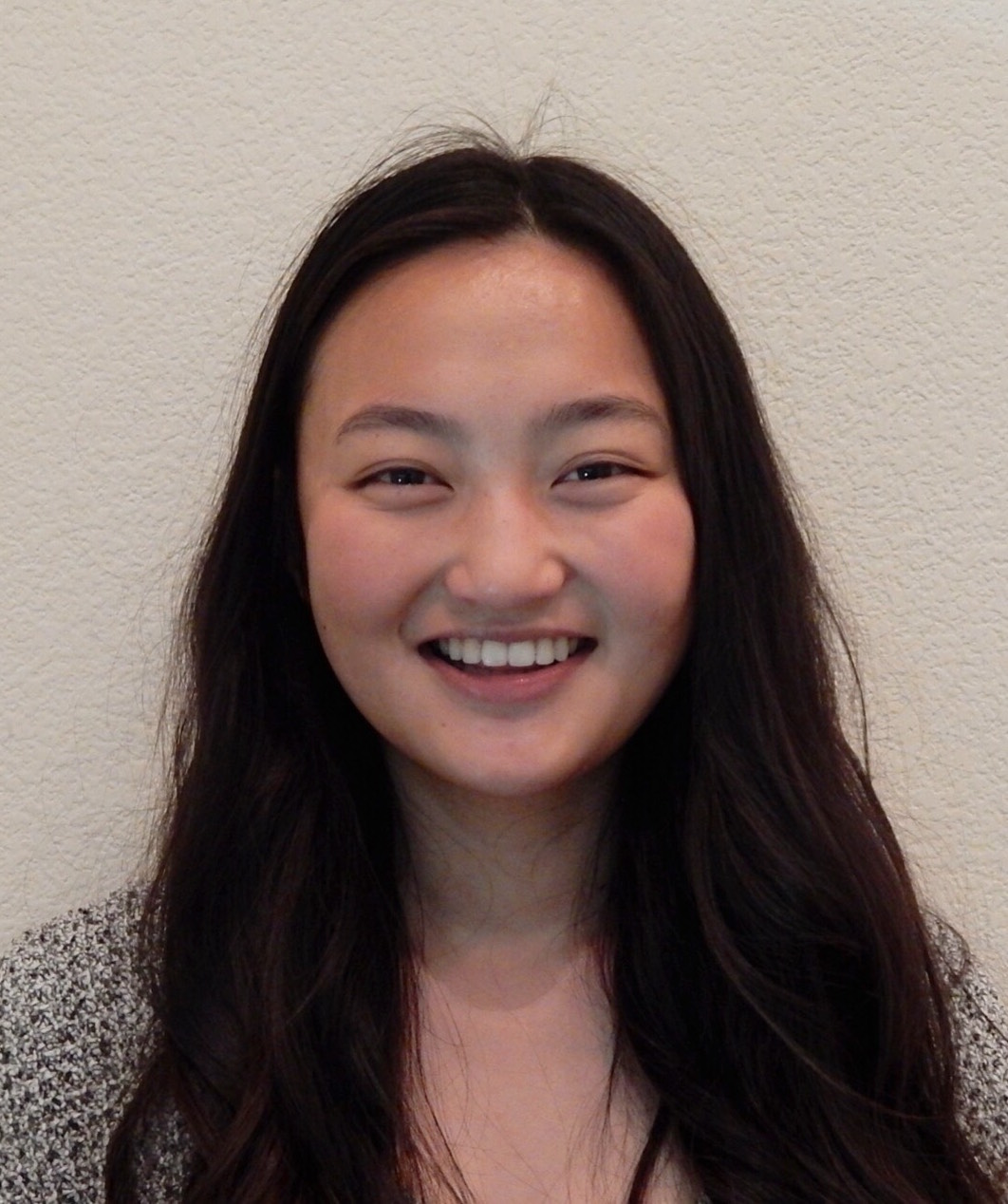
Sylvia MorrisonVideo post-production assistant for VJX v1. Sylvia is an independent video producer and editor specializing in educational content. She documented the work of the famous Yoga master, B.K.S. Iyengar, including his 75th birthday celebration in India and produces and distributes DVDs specializing in yoga. In addition, she carries on a family tradition, distributing a unique collection of classic train films produced by her father. |
 |
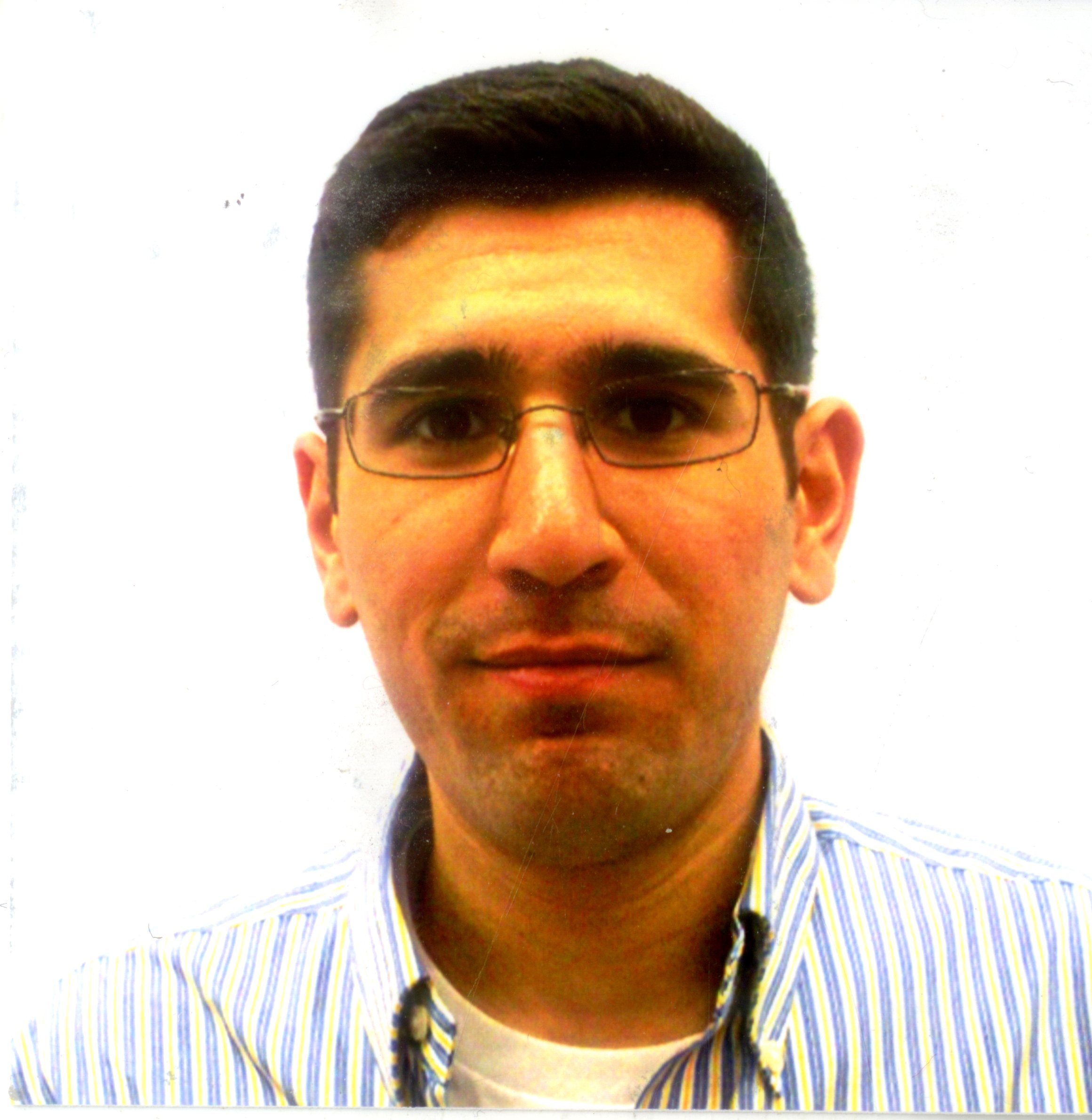
Helen HoProject assistant for VJx. Helen is a MIT '19 majoring in Computer Science and minoring in Japanese. She worked on fixing accessibility issues within the course, and updated older features for the 2016 release of the Visualizing Japan course. She is interested in the intersection of technology and culture. |
|
|
|
|
Additional support was provided by MITx and HarvardX administrative and technical teams. Thanks to HarvardX for filming and editing all lecture video for the course. Additional thanks to HarvardX for developing the Image Annotation Tool v1 and v2! |
|
FUNDING
This "Visualizing Japan" MOOC builds on the MIT Visualizing Cultures project, which received generous funding from the Andrew W. Mellon Foundation, Henry Luce Foundation, the Getty Foundation, Japan Foundation's Council for Global Partnership, National Endowment for the Humanities, MIT's d'Arbeloff Fund for Innovation in Undergraduate Education, and the MIT Microsoft-funded iCampus project.
IMAGE CREDITS
Many of the images are included under the CC BY-NC-SA 4.0 license: other course content and materials are subject to the MITx Online Terms of Service
The following institutions have generously opened their archives to Visualizing Cultures scholars and provided images from their collections for publication on the website:
Arthur M. Sackler Gallery, Smithsonian Institution
http://www.asia.si.edu
Mid-19th-century Japanese prints from the Sackler’s William Leonhart Collection are the basis of a unit featuring the earliest Japanese images of “foreigners of the five nations” as seen—and more often just vividly imagined!—in the treaty-ports of the 1860s.
Units:
Yokohama Boomtown
Hiroshima Peace Memorial Museum
http://www.pcf.city.hiroshima.jp/index_e2.html
The museum’s collection of over 2,000 paintings and drawings by survivors of the August 1945 atomic bombing of Hiroshima is the basis of a VC unit on the world’s first “Ground Zero.” Done mostly in the early 1970s, these are the personal images of the nuclear experience that burned themselves on the minds of survivors. They provide the most intimate insight imaginable into the human dimension of nuclear warfare.
Units:
Ground Zero 1945
Honolulu Academy of Arts
http://www.honoluluacademy.org
The Academy provided VC with the spectacular “Black Ship Scroll” painted in Japan around 1854, at the time of the second Perry mission. A 1960 gift of Mrs. Walter F. Dillingham, in memory of Alice Perry Grew, VC has reconstructed this thirty-foot-long horizontal scroll in several formats, including a video that permits it to been seen “whole” by anyone for the first time. Both the contradictions within the scroll (such as jolly as well as demonic foreigners) and its frequent old-fashioned humor make this a rare visual “text.”
Units:
Black Ships & Samurai
Hood Museum of Art, Dartmouth College
http://hoodmuseum.dartmouth.edu
Photography albums in the Hood Museum’s collection are the sources for several units by Dartmouth Professor of Art History Allen Hockley. These include a late 1860s album by pioneer photographer Felice Beato and a deluxe 10-volume edition of Francis Brinkley’s Japan from the 1890s. The transition of travel photography from collector’s item to commercial commodity profoundly influenced foreigners’ understanding of exotic and alien cultures—and the Web now makes it possible to reassemble these images and give them new life and meaning.
Units:
Felice Beato’s Japan: Places • Globetrotters’ Japan: Places • Globetrotters’ Japan: People
Museum of Fine Arts, Boston
http://www.mfa.org
The extensive Asian art collection of the Boston MFA has been a major resource for several VC units. The Jean S. and Frederic A. Sharf Collection of Japanese woodblock prints is the basic source for the three-part “Throwing Off Asia” unit—providing a stunning view of Westernization in late-19th-century Japan, the Sino-Japanese War of 1894–95, and the Russo-Japanese War of 1904–05. Many of the Sharf prints were digitized for the first time for use in VC units. The extraordinary Leonard A. Lauder Collection of Japanese Postcards was the source of foreign as well as Japanese graphics used in two units on the Russo-Japanese war—opening up an entirely new window for understanding popular global perceptions and emotions during Japan’s emergence as a major military power.
Units:
Throwing Off Asia I, II, III • Asia Rising • Yellow Promise/Yellow Peril
Peabody Essex Museum
https://www.pem.org/
One of the premier American museums for Asian export art, the Peabody Essex Museum in Salem, Massachusetts, contributed images depicting the early China trade based on paintings and artifacts in its outstanding collection.
Units:
The Rise & Fall of the Canton Trade System
Ryosenji Treasure Museum
https://artscape.jp/eng/mdb/1196069_18521.html
This little gem of a museum, affiliated with the Ryosenji Temple in Shimoda (one of the two Japanese ports opened for use by Commodore Perry in 1854), houses a fine collection of popular graphics that illuminate the strikingly diversified responses of the Japanese to this rude and ominous foreign intrusion. The generosity of Abbot Daiei Matsui in making his collection accessible was instrumental in launching VC’s pioneer first unit on Japan’s opening to the West.
Units:
Black Ships & Samurai
Shiseido Corporation
http://www.shiseidogroup.com/
Founded at the very beginning of the 20th century, the history of the Shiseido cosmetics firm amounts to a small mirror on the history of modernity in Japan—reflecting changing ideals of feminine beauty, the emergence of a vibrant consumer culture, cutting-edge trends in packaging and advertising art, and the persistence of cosmopolitan ideals even in the midst of the dark valley of war and oppression. Shiseido has opened its huge and exceptionally rich archives to VC as it moves on to bring a scholarly lens to popular culture in the 20th century.
Units:
Selling Shiseido I, II, III
Smith College Museum of Art
https://scma.smith.edu/
A pristine 50-print photo album from the Smith College of Art collection featuring views of Japanese people by Felice Beato provided VC with the basis for showing the birth of commercial photography of Japan for the tourist trade. Beato’s famous images set a pattern for what foreigners saw (and failed to see) in Japan for decades to come.
Units:
Felice Beato’s Japan: People
Additional Contributing Institutions
Allentown Art Museum
Bard Graduate Center
Chicago Historical Society
Chrysler Museum of Art
George Eastman House
Harvard University
Honolulu Bishop Museum
Kobe City Museum
Library of Congress
Nagasaki Municipal Museum
Nagasaki Prefectural Art Museum
New Bedford Whaling Museum
Shimura Toyoshiro Collection
Shiryo Hensanjo, University of Tokyo
Smithsonian Institution
Smithsonian Institution Division of Photographic Resources
Tokyo National Museum
US Naval Academy Museum
US Naval Historical Center
White House Historical Association
Yokohama Archives of History
Yokohama Museum of Art
© 2026 Massachusetts Institute of Technology